Food is said to be an art form. This is certainly the case in Thailand. Thai fruit carving is a traditional Thai skill that demands accuracy, precision, patience, and personal skill. Fruit carving has been a recognized art form in Thailand for centuries. It was initially solely used to adorn the royal family’s dinners. During Songkran (Thai New Year), fruit carving is a common tradition.
Let us discover more about the fruit carving and vegetable carving in Thailand. Scroll down, and continue reading.
Fruit and Vegetable Carving
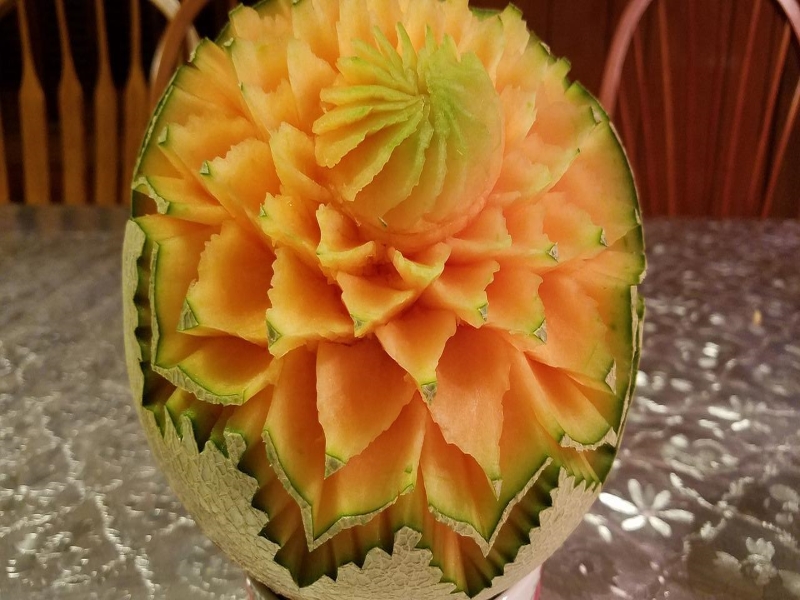
Brief History Of Fruit And Vegetable Carving
Fruit and vegetable carving is an essential part of Thailand’s history, and it has become a world-renowned form of art. This Thai art form originated in Sukhothai era, presently in central Thailand, in the 13th century. Women in the Thai royal court were trained how to carve fruits and vegetables.
Another frequent claim about the origins of fruit and vegetable carving is that it began in Thailand. It began in the 14th century at the Loi Krathong festival. During Loi Krathong, rafts are designed with a variety of items, such as banana leaves and flowers.
Nang Noppamart, one of King Phra Ruang’s attendants, had the intention to produce a distinctive design for her raft in the year 1364. Nang used a genuine flower as a model to carve a flower out of a vegetable. She also carved a bird and placed it next to the flower. She made a raft that is distinguished from the rest using these carvings. The carving’s elegance and beauty delighted King Phra Ruang, who ruled that every woman should master this new skill.
Furthermore, banana stalks were commonly used to accent a bier in central Thailand. Artists carved banana stalks into art known as Thaeng yuak art.
The popularity of fruit and vegetable carving fluctuated over the years. King Rama II was so fascinated by vegetable carving in 1808 that he composed poems about it. Vegetable carving, on the other hand, fell out of favor during Thailand’s 1932 revolution. Thai fruit and vegetable carving is taught in Thailand from the age of 11 in elementary schools through high school in order to restore interest. In universities around Thailand, optional courses are also available.
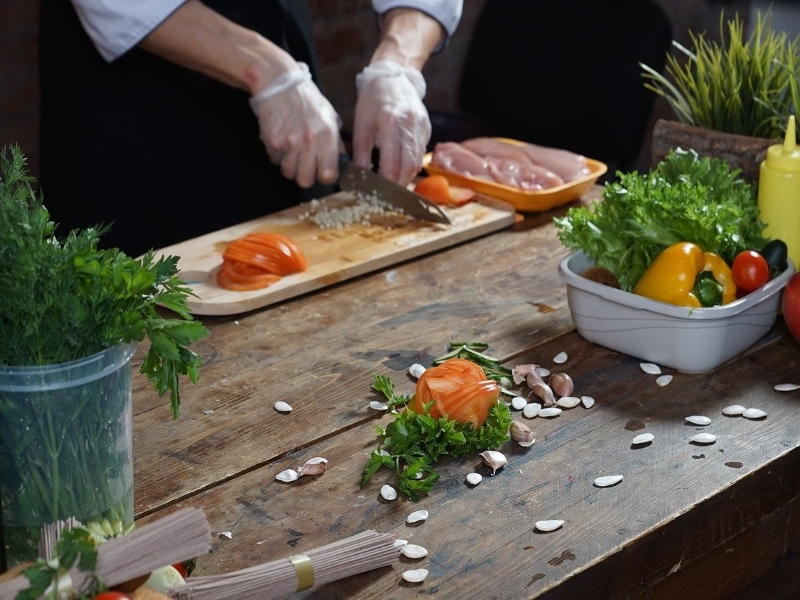
Food Carving Is Taught In School
Fruit and vegetable carvings are offered in primary, secondary, and as an optional course in university level in Thailand. The art has spread to other nations and is now practiced all around the world. Chefs all around the world practice it to boost their culinary presentation.
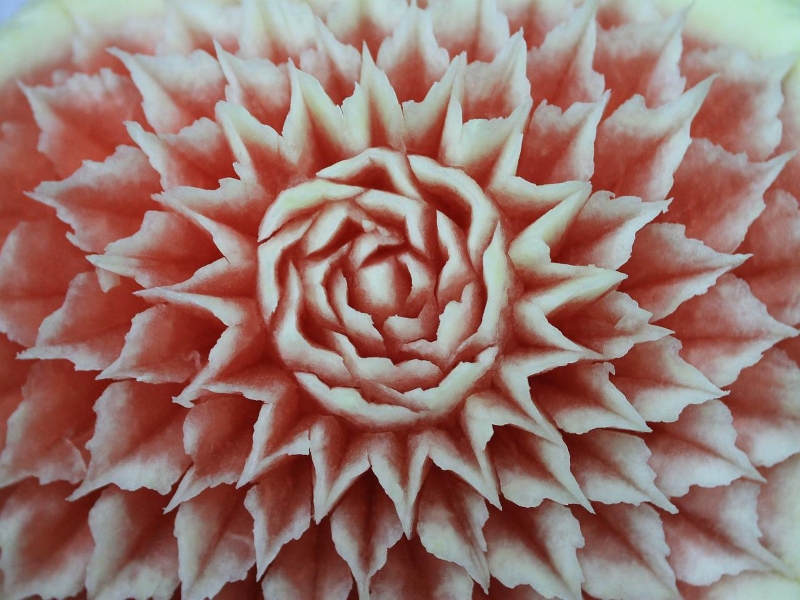
The Art Of Thai Fruit
Fruit carving, also known as kae sa luk in Thai, is a form of art that involves a lot of dedication to practice, carve the food properly, and artistically, and not eat it while doing so. It’s a distinctly Thai ritual that’s as beautiful as it is delicious, from making tomato peel into roses and cucumbers into flower petals to turning an apple into a swan. It also requires neatness and skills to do this. While various fruits may be formed in this manner, a watermelon is one of the most popular.
Every main course at a fine-dining Thai restaurant consisted of fruit or vegetables carved into flowers or leaves, and the artists were showcased in dining rooms, demonstrating their talent to the crowds.
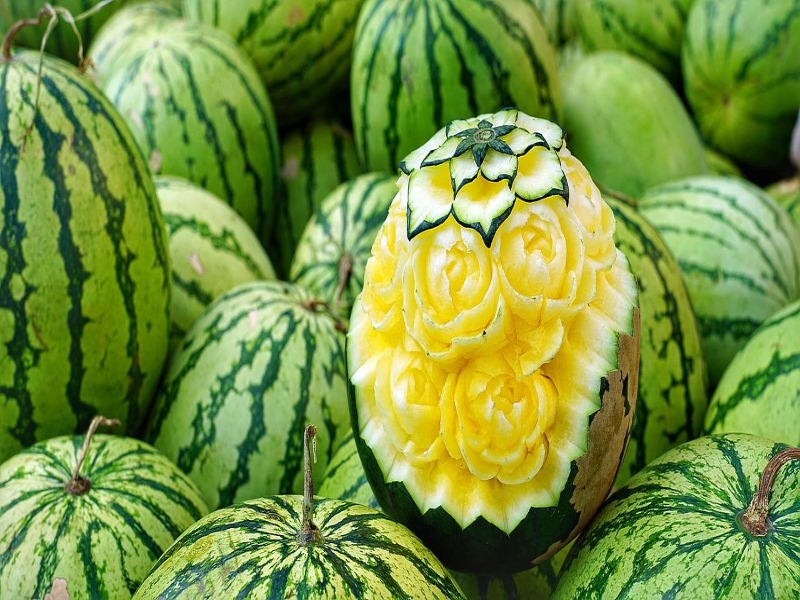
Watermelon Carving
Watermelons are commonly transformed into amazing pieces of art at fine restaurants and hotels because they are soft to handle and deep enough to enable for a decent lot of detail. Layered flowers, three-dimensional roses, and whatever else the creators can think of are common examples.
Many smaller Thai fruits and vegetables, in addition to watermelons, are used in food carvings. Bananas, celery, beets, cucumber, potatoes, and taro are among them.
Fruit Carving In The Present Day
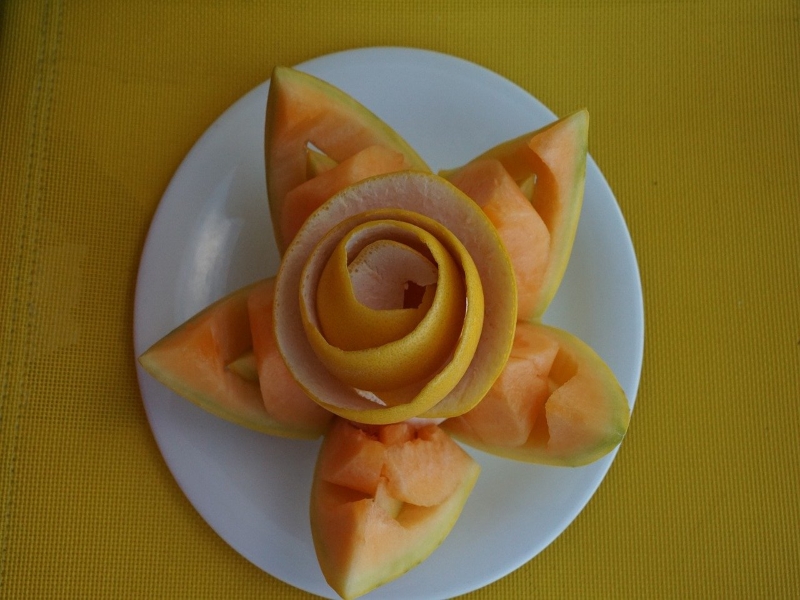
Fruit carving is a profession for certain individuals. Fruit carving is a food technique used by some chefs. Once fruit carvers have mastered the methods and have advanced to the professional level, they may charge restaurants, professional caterers, hotels, and resorts for their services. Professional fruit carvers may also make centerpieces and displays for events like wedding ceremonies and parties. On a lesser scale, fruit carvers might deliver a meal with beautiful garnishing to provide their audience a more aesthetically attractive experience.
Vegetable Carving In The Present Day
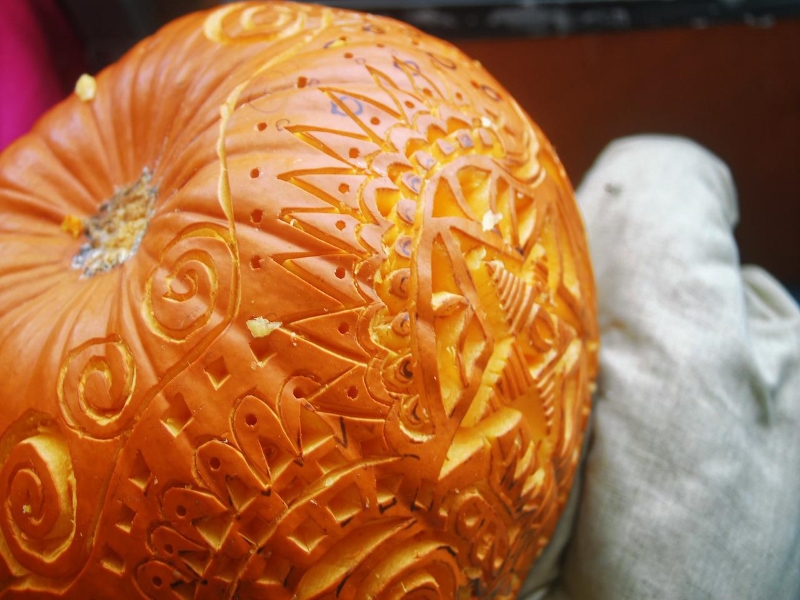
Vegetable carving may be found in a variety of Asian restaurants, hotels, cruise ships, and other establishments, regardless of its origins. Vegetable carving became popular outside of Asia in the mid-twentieth century. Since then, other civilizations have gradually learned to recognize the practice’s beauty and culture. Vegetable carving is now performed all around the world.
Vegetable carving typically produces flowers or birds, the only restriction is one’s imagination. Vegetable carving techniques and results differ from each person. Some details are carved artistically, while others have basic yet lovely forms. Vegetable carving is commonly used as a garnish, but it may also be used to arrange flowers.
Tools Used In Fruit And Vegetable Carving
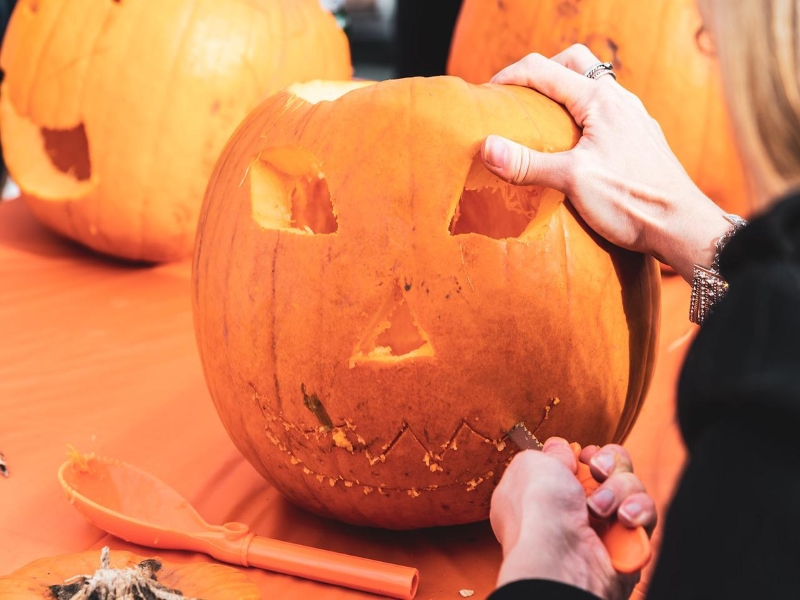
Fruit carving requires a variety of knives, most All of these techniques provide texture to the artwork or assist in its creation.
- Carving Knife
- Peel Zester
- Melon Baller
- U shaped garnish tool
The appropriate materials must be acquired before cutting a fruit. The standard procedure is to have the equipment on hand for when they are required during the carving process. Carvings can be done in two different ways. The first is Skin Carving, which involves carving the outer skin of a fruit or vegetable to expose the fleshy interior, in which the color is different from the skin, in order to create a motif using the contrast between the outer skin and the flesh of the fruit. Three Dimensional Carving is the second type of carving. The goal of this method is to carve the fruit into a three-dimensional object of the carver’s preference.
Floral motifs are the most popular three-dimensional design. It’s common to over-carve a fruit, resulting in nutritional loss, but it’s always best to start by tracing your design on the fruit. Depending on the design being developed, it may take so little time or it may be more complicated and take more effort and focus. Each design also requires various phases in the process. Each design is unique. One of the most crucial aspects of fruit carving is that the fruit you cut must be appropriate for the way it will be displayed. The majority of fruit carvings will need to be cooled before being placed in the correct arrangement.
Carving Institute In Bangkok
In Bangkok, a Thai carving institute offers consumable arrangements for wedding decorations and other ceremonies, as well as carvings by prominent food stylists in the shape of carved fruits and vegetables as gorgeous decorations.
One of the best food carving school in Thailand is Siam Carving Academy. In Thailand, there are several culinary schools where you may go to the wet market, learn how to create a Thai dish or two, and then carve a vegetable rose. Siam Carving Academy, on the other hand, is the only Thai fruit and vegetable carving school in Bangkok that can give you with a carving certificate.